
 Save
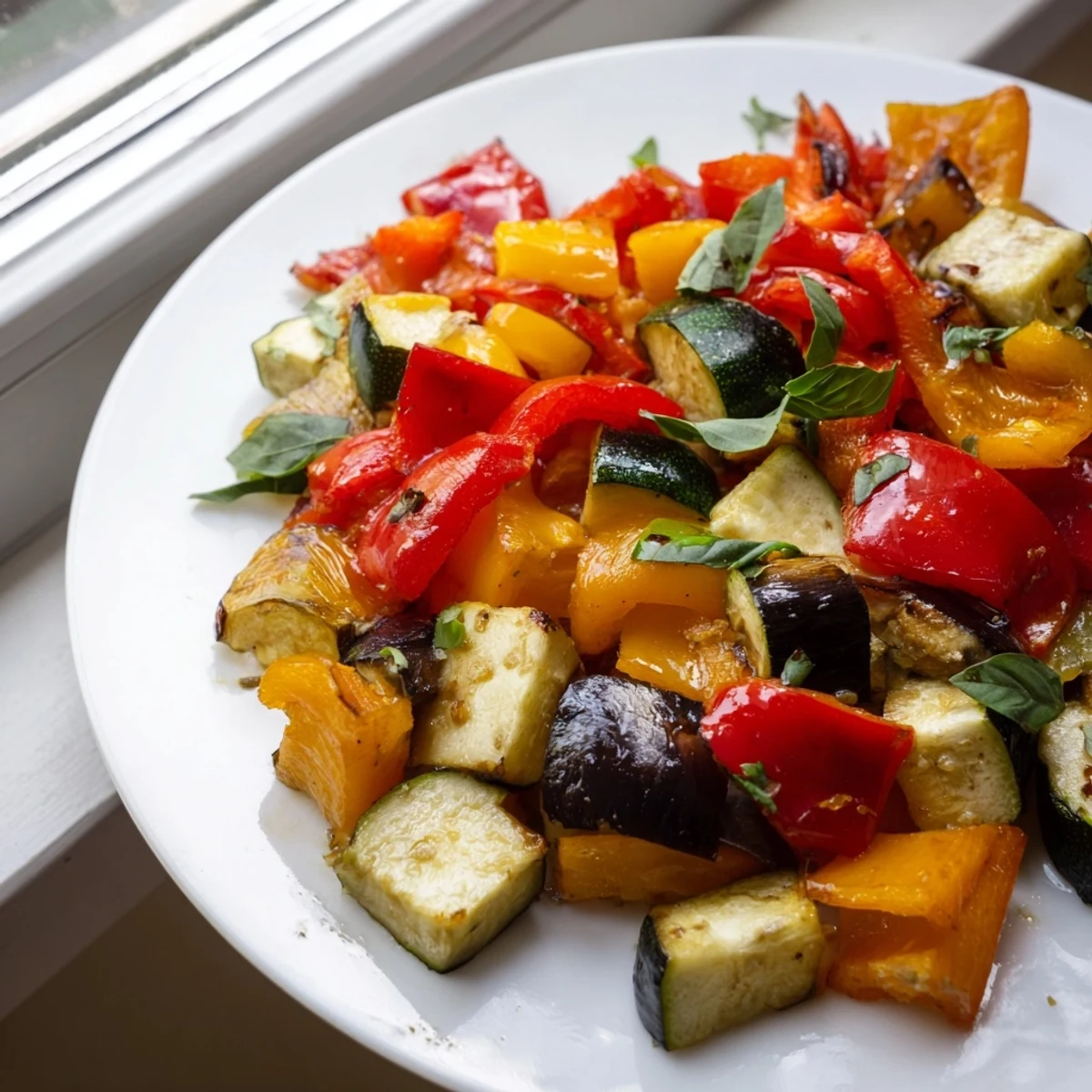
Save A colorful mix of bell peppers, zucchini, eggplant, red onion, and cherry tomatoes gets tossed with extra virgin olive oil, garlic, oregano, and thyme, then roasted at high heat until tender and lightly caramelized. The result is a deeply flavorful dish that highlights the simplicity of Mediterranean cooking — letting quality ingredients and good technique do the work. Fresh basil is folded in right after roasting for a bright, aromatic finish.
This versatile dish serves four and comes together with just 20 minutes of prep. It pairs beautifully alongside grilled fish or chicken, works as a topping for grains and pasta, or stands on its own as a satisfying vegetarian main. Naturally vegan and gluten-free, it adapts easily to seasonal produce or personal preference — swap in whatever you have on hand and it still delivers.
There was a June evening when my kitchen smelled so absurdly good that my neighbor actually knocked to ask what was burning in the best possible way. It was just a sheet pan of vegetables, but the char on the edges and that hit of roasted garlic made it feel like something pulled from a seaside taverna in Greece.
I first threw this together on a weeknight when I had nothing planned and a crisper drawer full of vegetables that were one day away from guilt. My roommate at the time, who swore she hated eggplant, went back for thirds and never admitted it.
Ingredients
- Red and yellow bell peppers: Using both colors is not just for looks since they caramelize slightly differently and give you a sweeter, more complex flavor than one variety alone
- Zucchini: Slice these on the thicker side because they shrink considerably and thin pieces turn to mush before anything else is done
- Eggplant: Cubing it small and even is the secret to getting those caramelized edges without undercooked centers
- Red onion: Cut into wedges rather than dice so they hold their shape and get those gorgeous charred tips
- Cherry tomatoes: Halving them lets them burst and jam up in the oven which creates a natural sauce right on the pan
- Extra virgin olive oil: Three tablespoons might feel generous but this is what carries the herbs and creates that restaurant style finish
- Garlic: Minced raw garlic roasts into something sweet and mellow so do not be shy with three cloves
- Dried oregano and thyme: These two together are the backbone of that Mediterranean flavor without needing a spice cabinet overhaul
- Fresh basil: Added after roasting because heat kills its bright peppery quality and you want that contrast against the warm vegetables
Instructions
- Get your oven screaming hot:
- Preheat to 220 degrees Celsius and line a large baking sheet with parchment paper. That high heat is what builds the caramelization so do not be tempted to lower it.
- Toss everything like you mean it:
- Pile all the chopped vegetables into your biggest bowl, pour in the olive oil, garlic, oregano, thyme, salt, and pepper, then use your hands to turn and coat every single piece.
- Spread with intention:
- Lay the vegetables in a single layer on the baking sheet with space between them. Crowding is the enemy of caramelization and will steam everything into sadness.
- Roast and flip halfway:
- Slide the pan into the oven for 30 to 35 minutes, pulling it out at the 15 minute mark to give everything a good toss with a spatula.
- Finish with fresh basil:
- The moment the vegetables come out with tender centers and charred edges, toss them with chopped basil and transfer to a platter. Serve warm or at room temperature because both ways work beautifully.
 Save
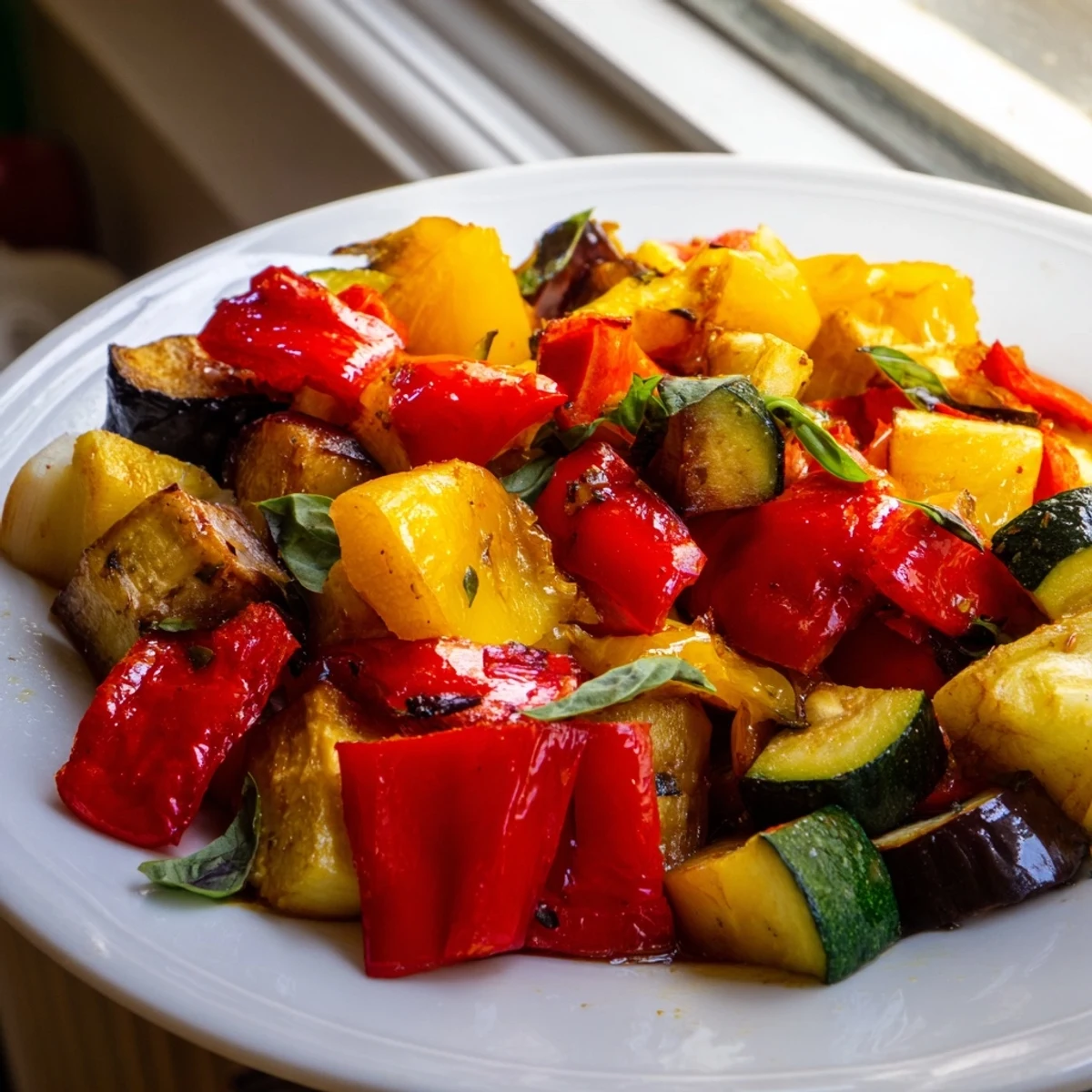
Save This dish quietly became the thing I bring to every potluck and family gathering because it disappears faster than anything else on the table and people always assume it took real effort.
Picking the Right Vegetables
I have learned that firm vegetables with lower water content roast the most reliably so stick with bell peppers, zucchini, and eggplant as your base. Softer vegetables like squash can work but they need to go in larger pieces or they will collapse before the others are ready.
The Olive Oil Question
Not all olive oil behaves the same at high heat and I have scorched more than one batch using a delicate finishing oil. A good quality extra virgin with a slightly robust flavor profile holds up beautifully at 220 degrees and adds that authentic Mediterranean depth.
Serving It Beyond the Side Dish
These roasted vegetables are endlessly versatile and I have tucked them into warm pita with hummus, folded them into scrambled eggs the next morning, and spooned them over creamy polenta on cold nights.
- Toss them with hot pasta and a handful of parmesan for a ten minute meal
- Layer them under a piece of grilled fish for an easy one pan dinner
- Keep leftovers in the fridge because they actually taste better the next day
 Save
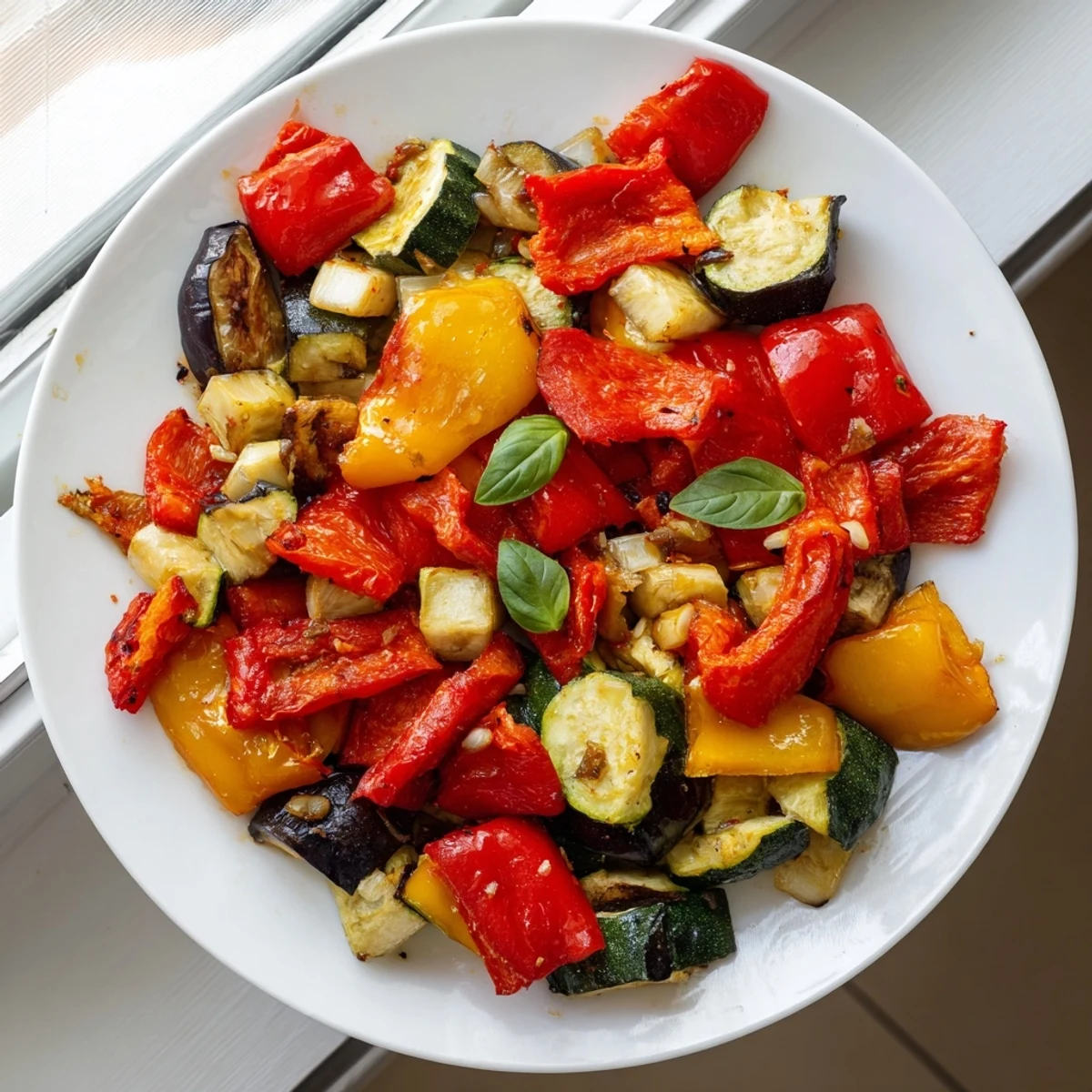
Save Sometimes the simplest plate of food is the one that makes people close their eyes and just eat. This is that plate.
Recipe FAQs
- → What vegetables work best for Mediterranean roasting?
-
Bell peppers, zucchini, eggplant, red onion, and cherry tomatoes are classic choices. You can also add mushrooms, cauliflower, or artichoke hearts depending on what's in season.
- → Can I prepare the vegetables ahead of time?
-
Yes, you can chop and season the vegetables up to a day in advance. Store them in an airtight container in the refrigerator, then spread on the baking sheet when ready to roast.
- → What temperature is ideal for roasting vegetables?
-
220°C (425°F) works well for achieving tender interiors with lightly caramelized edges. Higher heat promotes browning without overcooking the vegetables.
- → How do I prevent the vegetables from steaming instead of roasting?
-
Spread them in a single layer on the baking sheet with space between pieces. Overcrowding traps moisture and leads to steaming rather than caramelization.
- → Is this dish suitable for vegan and gluten-free diets?
-
The base version is naturally vegan and gluten-free. If you add feta cheese as a variation, it will no longer be vegan but remains gluten-free.
- → How should I store and reheat leftovers?
-
Keep leftovers in an airtight container in the refrigerator for up to 3 days. Reheat in the oven at 180°C or briefly in a skillet to maintain texture.