
 Save
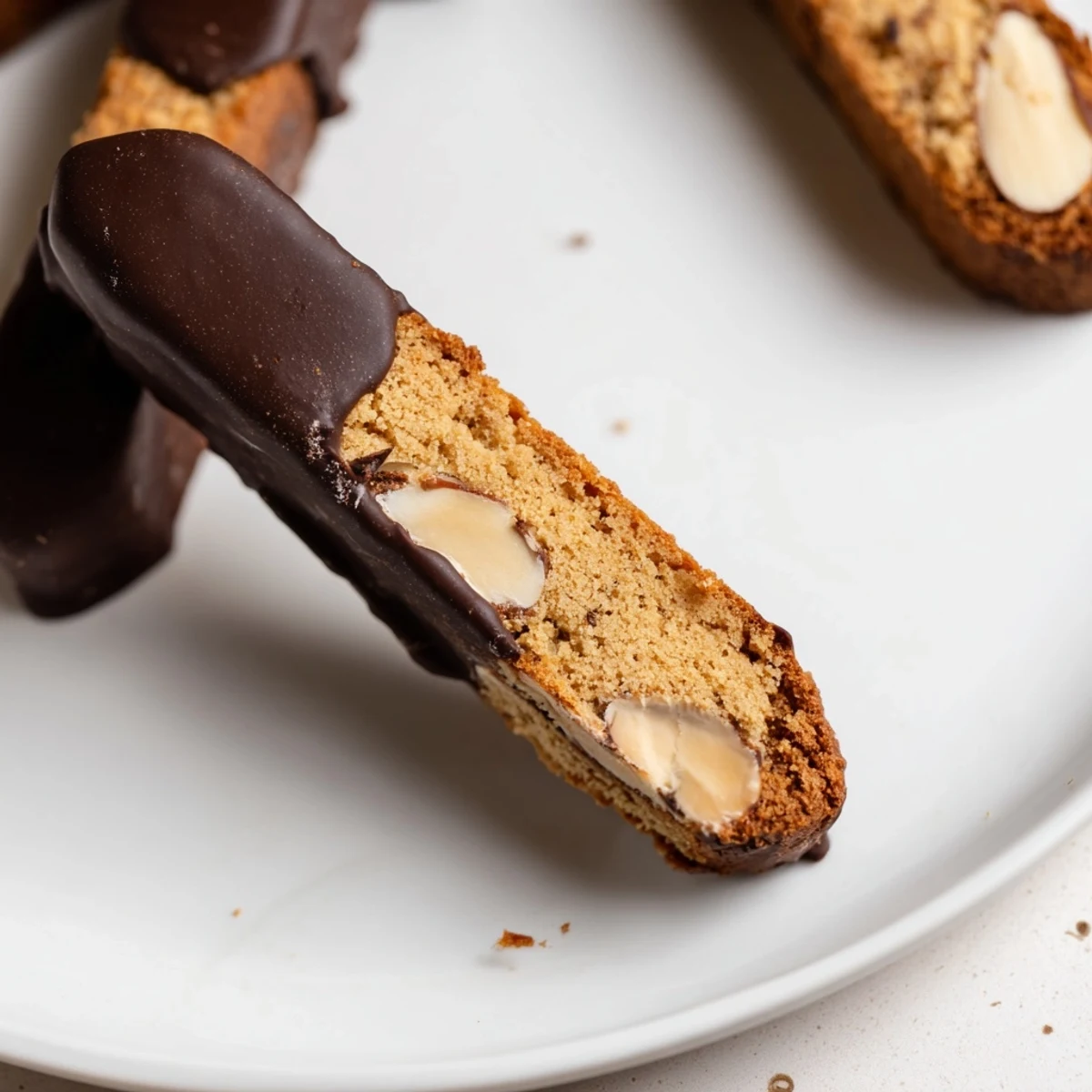
Save This classic Italian treat features twice-baked biscotti loaded with toasted almonds for a satisfying crunch. The crisp cookies are then dipped in smooth, dark chocolate, creating a perfect balance of flavors. Ideal for pairing with coffee or gifting, these biscotti combine the nuttiness of almonds with a rich chocolate finish. The preparation involves shaping and baking twice to achieve their iconic texture, making them a delightful indulgence for any occasion.
I remember the first time I made biscotti was in a tiny kitchen in a borrowed apartment, trying to recreate the ones I'd dipped in espresso at a café in Rome. The baker there told me the secret was patience—baking them twice to get that perfect snap. Now, every time I pull these almond biscotti from the oven, it takes me back to that exact moment, fork in hand, dunking and laughing with friends who couldn't believe I'd made them from scratch.
I'll never forget the holidays when my neighbor smelled these baking and showed up at my door with coffee. We ended up dunking them together while she told me stories about her Italian grandmother—turns out these humble cookies became the bridge that turned a friendly face into a real friendship. Now I always make an extra batch to give away.
Ingredients
- All-purpose flour (2 cups): The foundation that holds everything together. Don't sift unless your flour is packed—just stir it in the bag and scoop gently.
- Granulated sugar (1 cup): Sweetness that becomes caramelized and complex during the double-bake. This is what creates those subtle dark edges you're chasing.
- Baking powder (1 1/2 tsp): The lift that makes these light enough to be elegant, not dense. Don't skip or double it—this ratio is the sweet spot.
- Salt (1/4 tsp): Brings out every flavor, especially the almonds and chocolate. Seems small but makes all the difference.
- Large eggs (3): They bind the dough and create structure. Use room temperature if you remember—they incorporate better.
- Pure vanilla extract (1 tsp): Adds warmth and depth that makes people ask what your secret ingredient is.
- Almond extract (1/2 tsp): Just a whisper of this is essential—it amplifies the nuttiness without making them taste artificial. Don't be tempted to add more.
- Whole almonds, toasted and coarsely chopped (1 cup): Toast them yourself if you can. The smell alone is worth it, and they're better than pre-toasted. The coarse chop gives you those satisfying big pieces.
- Dark chocolate, 60–70% cacao (6 oz): The finish that makes these feel special. Choose a quality chocolate you'd actually enjoy eating straight—it matters more than you'd think.
Instructions
- Set your stage:
- Preheat your oven to 350°F and line a baking sheet with parchment paper. This isn't a step to rush—those few minutes of preheat time matter for even baking. You want that oven ready to go when your dough is shaped.
- Build your dry foundation:
- In a large bowl, whisk together the flour, sugar, baking powder, and salt. Make sure you're whisking, not stirring—you want to aerate the flour slightly and distribute the leavening evenly. This is where you're setting up for success.
- Wake up your wet ingredients:
- In a separate bowl, beat the eggs with vanilla and almond extract until they're fully combined and slightly frothy. Take your time here—you're incorporating air, which will make these lighter and crispier.
- Bring it together gently:
- Stir the wet ingredients into the dry mixture until mostly incorporated. Don't overmix—you want a slightly shaggy dough. Overmixing toughens biscotti, and that's the last thing you want.
- Fold in the almonds:
- Carefully fold in your toasted almonds, making sure they're evenly distributed. These little nuggets of flavor should be in every bite.
- Shape your logs:
- Divide the dough in half and, with floured hands to prevent sticking, shape each half into a log about 12 inches long and 2 inches wide. Get them as evenly shaped as you can—this makes the final slices cook more uniformly. Place them on your prepared baking sheet with space between them; they'll spread slightly.
- First bake—the foundation:
- Bake for 25 to 28 minutes until the logs are lightly golden and feel set when you touch them gently. They should smell incredible. Let them cool for 10 minutes—this cooling is essential because you're about to slice them, and warm dough is easier to work with.
- Lower the heat for the long game:
- While they cool, reduce your oven temperature to 300°F. This gentler heat is what creates that perfect crispness in the second bake without darkening too much.
- The satisfying slice:
- Using a serrated knife and a gentle sawing motion (not pressing down hard), slice the logs diagonally into 1/2-inch thick pieces. Diagonal slices are traditional and they look beautiful. Take your time—this is meditative work, and it shows in the final product.
- Second bake—the magic:
- Arrange your slices cut side down on the baking sheet. Bake for 12 minutes, then flip each piece and bake another 10 to 12 minutes until they're deeply crisp and dry to the touch. You'll know they're done when they sound hollow when tapped. Cool completely on a wire rack—this is where they firm up into that perfect dunk-able texture.
- Melt your chocolate:
- In a heatproof bowl set over barely simmering water (a double boiler), melt your dark chocolate, stirring occasionally. The gentle heat keeps the chocolate smooth and glossy. If you use the microwave instead, heat in 20-second intervals and stir well between each heating—chocolate can seize in an instant.
- The elegant finish:
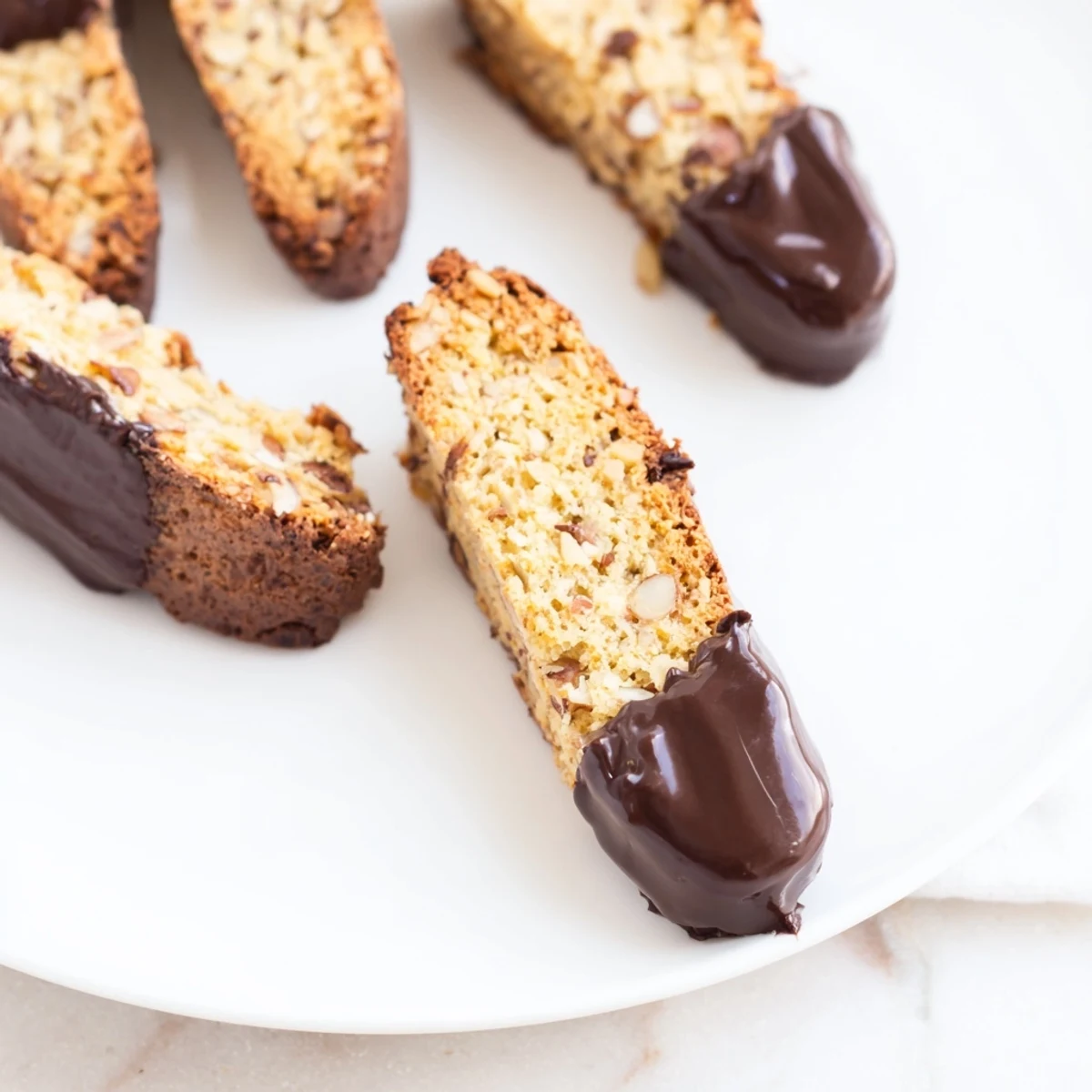
- Dip one end of each biscotti into the melted chocolate, letting excess drip off so you're coating without drowning it. Place dipped biscotti on parchment paper and let the chocolate set completely at room temperature. Patience here creates that snappy chocolate shell that's part of the whole experience.
 Save
Save There's a particular kind of joy in giving these as gifts—watching someone bite into one, close their eyes at the crunch and chocolate, and immediately ask for the recipe. It's the moment when you realize you've made something worth sharing, something that tastes like care.
Why These Aren't Like Store-Bought
Homemade biscotti are different because you can taste the intentionality in every bite. The almonds are toasted fresh, the chocolate is real and melts on your tongue, and there's no weird aftertaste from preservatives. They're also better because you can adjust them exactly to your taste—more almond extract if you love it, a thicker chocolate coating if that's your thing. These cookies improve as they sit, the flavors deepening over days, so making them ahead isn't rushing—it's planning for better biscotti.
The Art of Dunking
Biscotti earned their reputation as the perfect companion to hot beverages for a reason. A quick dip into espresso, coffee, or even hot chocolate softens them just enough while the interior stays structured. There's a rhythm to it—dip, count to two, withdraw. Too long and they fall apart; too short and you miss the magic. Some people think dunking is casual. It's actually a technique, and once you perfect it, you understand why people have been making these for centuries.
Storage and Sharing
The beautiful thing about biscotti is their shelf life. Stored in an airtight container, they last up to two weeks, which means you can make them this weekend and enjoy them all the next week, or give them as gifts without worrying about them going stale. They're perfect for holiday baskets, teacher appreciation gifts, or when you want to bring something homemade to a friend who has everything.
- Keep them in an airtight container at room temperature—moisture is the enemy of crispness, so those sealed containers are non-negotiable.
- If they ever soften up (which happens in humid weather), pop them back in a 300°F oven for 5 minutes to re-crisp them.
- They freeze beautifully too—just wrap them well and they'll keep for months, ready to be thawed and enjoyed whenever the craving hits.
 Save
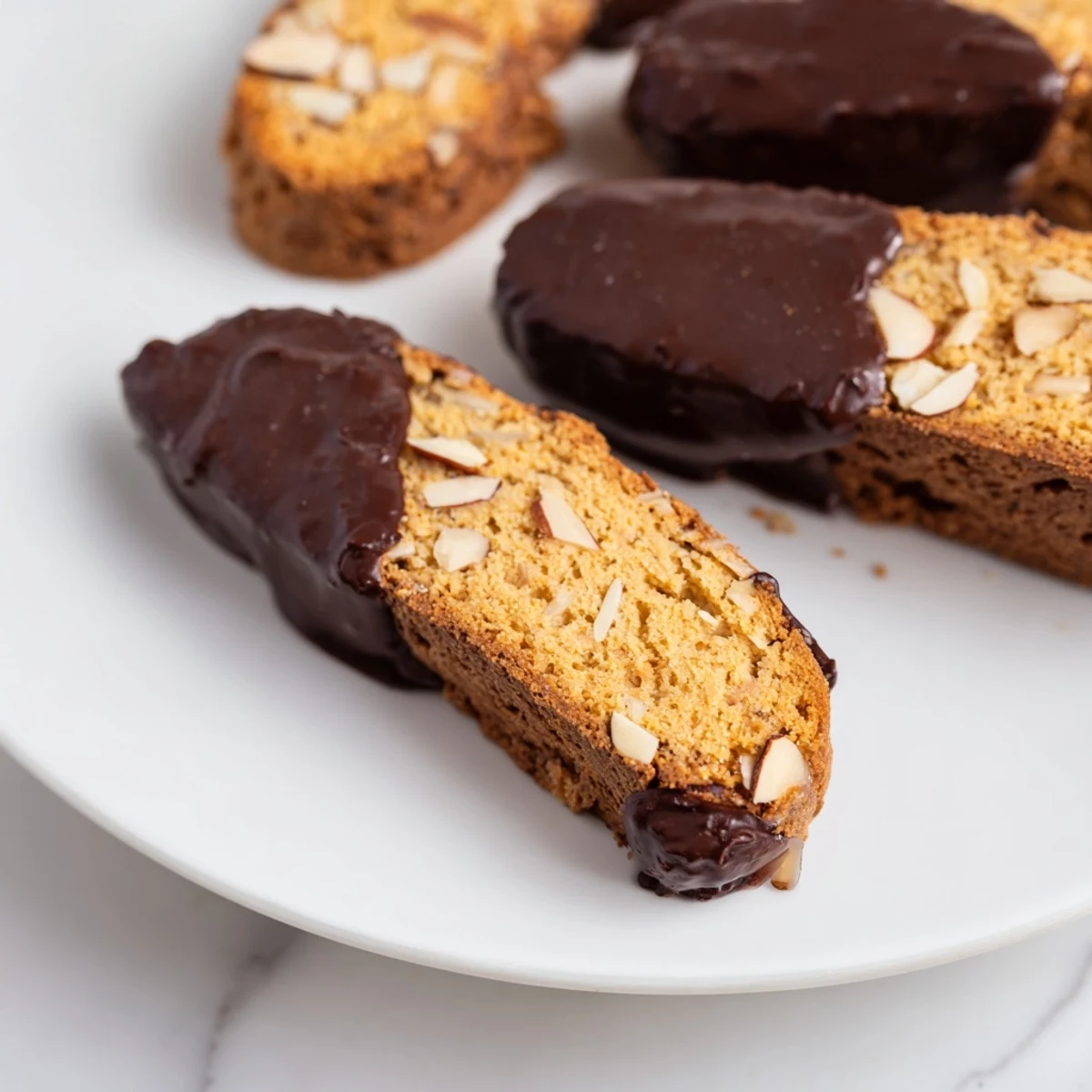
Save These chocolate-dipped almond biscotti prove that homemade doesn't have to be complicated—it just has to be made with attention. Once you master them, you'll find yourself making batch after batch, simply because they're worth it.
Recipe FAQs
- → What makes biscotti twice-baked?
-
Biscotti are first baked as logs, then sliced and baked again to achieve their characteristic crisp texture.
- → Can I use other nuts instead of almonds?
-
Yes, hazelnuts or pistachios can be substituted for almonds for a unique flavor twist.
- → How do I melt chocolate properly for dipping?
-
Use a double boiler or microwave in short intervals, stirring frequently until smooth and glossy.
- → How should biscotti be stored to maintain freshness?
-
Store biscotti in an airtight container at room temperature for up to two weeks to preserve crispness.
- → Can I add flavor variations to the dough?
-
Adding a teaspoon of orange zest to the dough enhances the flavor with a fresh citrus note.