
 Save
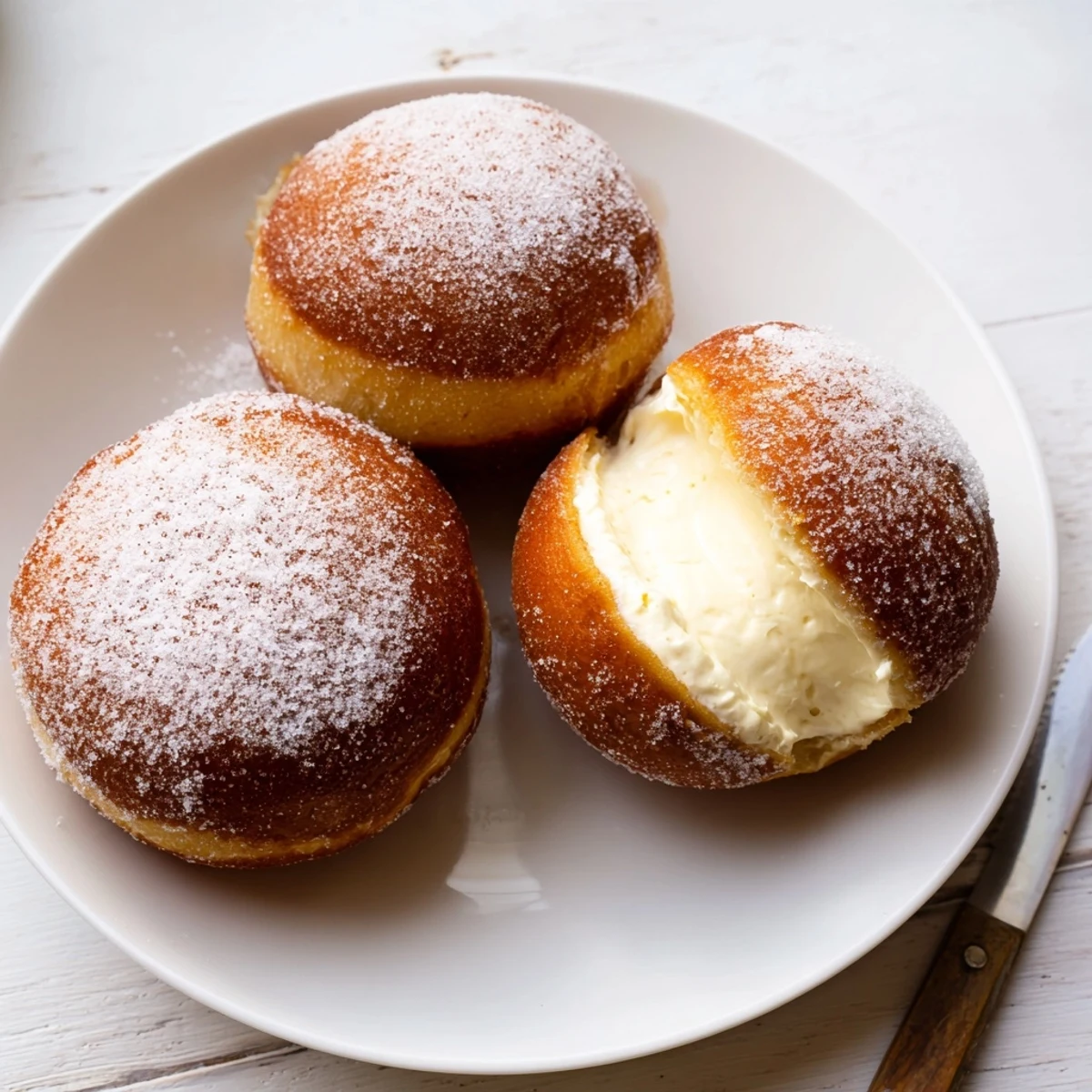
Save These classic Italian bomboloni feature incredibly light, fluffy dough that rises to perfection before being fried until golden. Each round is filled generously with silky vanilla pastry cream made from scratch using egg yolks, milk, and butter. The exterior gets a generous coating of granulated sugar while still warm, creating that signature crunch. The entire process requires about 2.5 hours including rising time, with active preparation around 30 minutes. Best enjoyed fresh the same day, ideally alongside a hot cappuccino or espresso for the full Italian café experience.
The first time I bit into a warm bomboloni in Rome, vanilla cream spurted onto my wrist and I didnt even care. I spent the rest of that vacation hunting down the best ones, comparing textures and fillings like it was serious research. When I finally attempted making them at home, my kitchen smelled like an Italian bakery and I knew I was in trouble.
My neighbor smelled the frying oil through our shared wall and showed up at my door with two espresso cups. We ate them standing up, sugar dusting our dark sweaters, pretending we were in some tiny Italian café instead of my drafty kitchen. Now she asks about them every time she sees me carrying flour bags.
Ingredients
- 3 1/2 cups all-purpose flour: This creates just the right structure for pillowy donuts that hold their shape without becoming tough
- 1/4 cup granulated sugar: Feeds the yeast and adds subtle sweetness without making the dough too rich
- 2 1/4 tsp active dry yeast: Use fresh yeast for the best rise, and make sure your milk is warm but not hot
- 1/2 tsp salt: Essential for balancing sweetness and developing proper gluten structure
- 3/4 cup whole milk: Room temperature milk helps the yeast activate evenly throughout the dough
- 2 large eggs: Should be at room temperature so they incorporate smoothly into the dough
- 1/4 cup unsalted butter: Softened butter creates a tender crumb and adds that melt in your mouth quality
- 1 tsp vanilla extract: Pure vanilla makes all the difference in both dough and cream filling
- Vegetable oil: You need about 3 inches of oil for proper frying depth
- 3/4 cup granulated sugar for dusting: Extra sugar creates that signature crackly coating
- 2 cups whole milk: Whole milk creates the richest, most velvety pastry cream
- 1/2 cup granulated sugar: Sweetens the cream just enough to balance the rich base
- 1/4 cup cornstarch: This is what gives the cream its luscious, pudding like texture
- 4 large egg yolks: Room temperature yolks emulsify better and create smoother cream
- 1 tsp vanilla extract: The backbone of classic pastry cream flavor
- 2 tbsp unsalted butter: Whisked in at the end for an impossibly smooth finish
Instructions
- Mix the dough foundation:
- Combine flour, sugar, yeast, and salt in your stand mixer bowl, letting everything blend before adding the wet ingredients
- Bring the dough together:
- Pour in warm milk, crack in the eggs, add vanilla and softened butter, then mix until a soft, slightly tacky dough forms
- Develop the gluten:
- Knead for 8 to 10 minutes until the dough feels smooth, elastic, and bounces back when you press it
- Let it rise:
- Place dough in a lightly greased bowl, cover with a warm towel, and walk away for about 1 to 1.5 hours until it has doubled
- Shape the rounds:
- Roll the dough to 3/4 inch thickness and cut out 3 inch circles, placing them on parchment with room to expand
- Second rise:
- Cover loosely and let the donuts rest for another 30 to 45 minutes until puffy and light
- Warm the milk:
- Heat milk in a saucepan until steam rises but it is not boiling
- Prepare the yolk base:
- Whisk egg yolks with sugar and cornstarch until the mixture is pale and completely smooth
- Temper the eggs:
- Slowly stream hot milk into the yolks while whisking constantly to prevent scrambling
- Thicken the cream:
- Return everything to the pot and cook over medium heat, whisking until the mixture thickens and bubbles for about 2 to 3 minutes
- Finish the pastry cream:
- Remove from heat, whisk in vanilla and butter until silky smooth, then press plastic wrap directly onto the surface and chill
- Heat the oil:
- Bring vegetable oil to 350°F in a heavy pot, maintaining steady temperature throughout frying
- Fry to golden:
- Cook 2 to 3 donuts at a time for 2 to 3 minutes per side until deep golden brown, flipping gently halfway
- Sugar coating:
- Drain briefly on paper towels, then immediately roll warm donuts in granulated sugar while they are still slightly tacky
- Fill and serve:
- Poke a small hole in the side of each cooled donut and pipe in chilled cream until it feels satisfyingly full
 Save
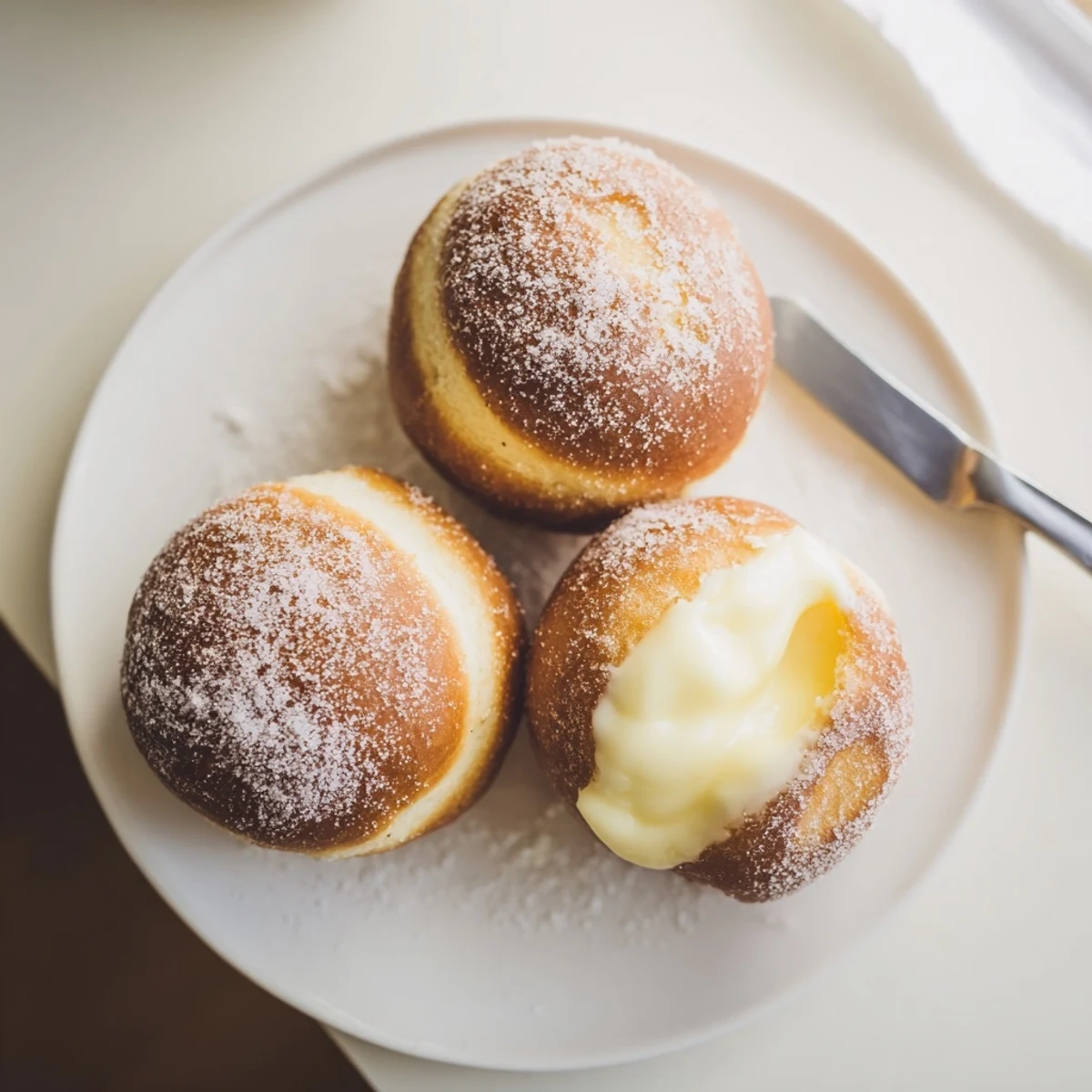
Save My daughter now requests these for every special occasion, and I have learned to double the recipe because they disappear faster than I can pipe the filling. There is something magical about watching someone bite into one and seeing their eyes close at that first contrast of warm sugar and cool cream.
Frying Temperature Secrets
I ruined my first batch by letting the oil get too hot, creating donuts that were burnt outside and raw inside. Now I keep a thermometer clipped to the side and never let it drift above 360°F. The gentle sizzle, not a violent bubble, tells you the temperature is right.
Making Pastry Cream Like a Pro
The plastic wrap trick is not optional, it is what keeps that skin from forming on top. I learned this after scraping off enough skin to fill a small bowl, and now I press the wrap directly onto the surface like I am sealing in a secret. Your cream will stay perfectly smooth and ready for piping.
Storage and Make Ahead Magic
You can freeze the fried, sugared donuts before filling them for up to a month. Thaw at room temperature, give them a quick refresh in a 300°F oven for 5 minutes, then fill with freshly made cream. This trick saved me when I accidentally made double batches for a small gathering.
- Fill donuts within an hour of serving for the best texture
- Unfilled donuts stay fresh at room temperature for one day
- Never refrigerate filled donuts or they will become tough
 Save
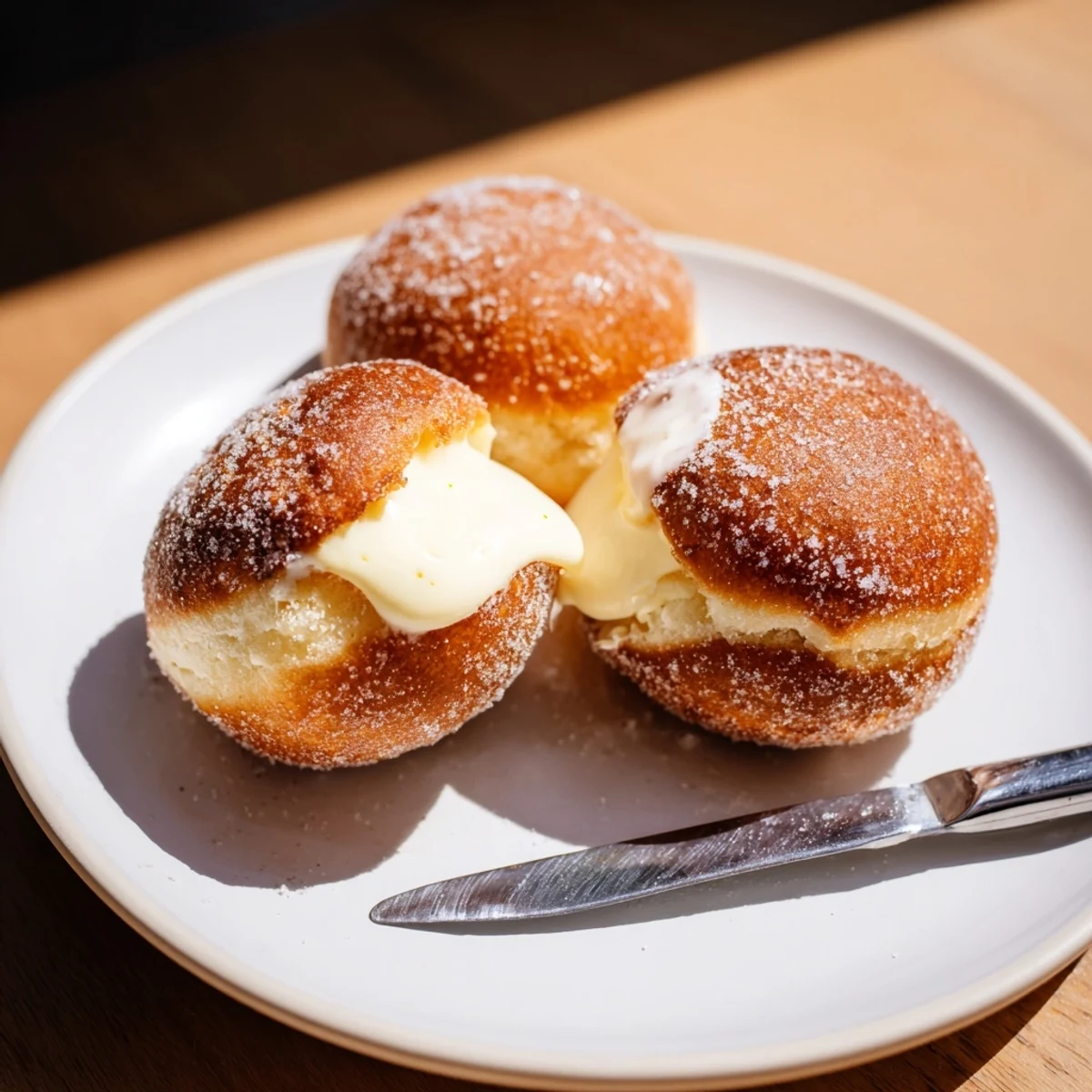
Save These bomboloni have become my go to for bringing people together, one sugar dusted bite at a time. There is something about sharing food that takes time and care that makes ordinary moments feel like celebrations.
Recipe FAQs
- → What makes bomboloni different from regular donuts?
-
Bomboloni are Italian-style round donuts that are always filled with cream, unlike American donuts which may have holes or glaze toppings. The dough is lighter and more bread-like, typically leavened with yeast and containing eggs and butter for richness.
- → Can I make the dough ahead of time?
-
Yes, you can prepare the dough and let it complete its first rise, then refrigerate it overnight. Bring to room temperature before shaping and doing the second rise. The pastry cream can also be made up to 2 days in advance and stored in the refrigerator.
- → What's the best way to fill the donuts?
-
Use a piping bag fitted with a round tip (about 1/4 inch). Poke a small hole in the side of each cooled donut and insert the tip about halfway through. Gently squeeze until you feel slight resistance, indicating the donut is filled. You can also use a chopstick to create the initial hole.
- → How do I know when the oil is at the right temperature?
-
Use a kitchen thermometer to maintain 350°F (175°C). If you don't have one, insert a wooden spoon handle into the oil—if bubbles form around it steadily, the oil is ready. Oil that's too cool will make greasy donuts, while oil that's too hot will burn the outside before the inside cooks.
- → Can I bake these instead of frying?
-
While you can bake bomboloni at 375°F for 12-15 minutes, the texture will be more like a muffin than a traditional donut. The fried version develops that characteristic crispy exterior and tender interior that makes bomboloni special.
- → How should I store bomboloni?
-
Store at room temperature in an airtight container for up to 1 day. After that, the sugar coating will start to dissolve and the dough will become stale. For best results, fill donuts just before serving rather than storing them filled. Unfilled donuts can be frozen for up to 2 weeks.