
 Save
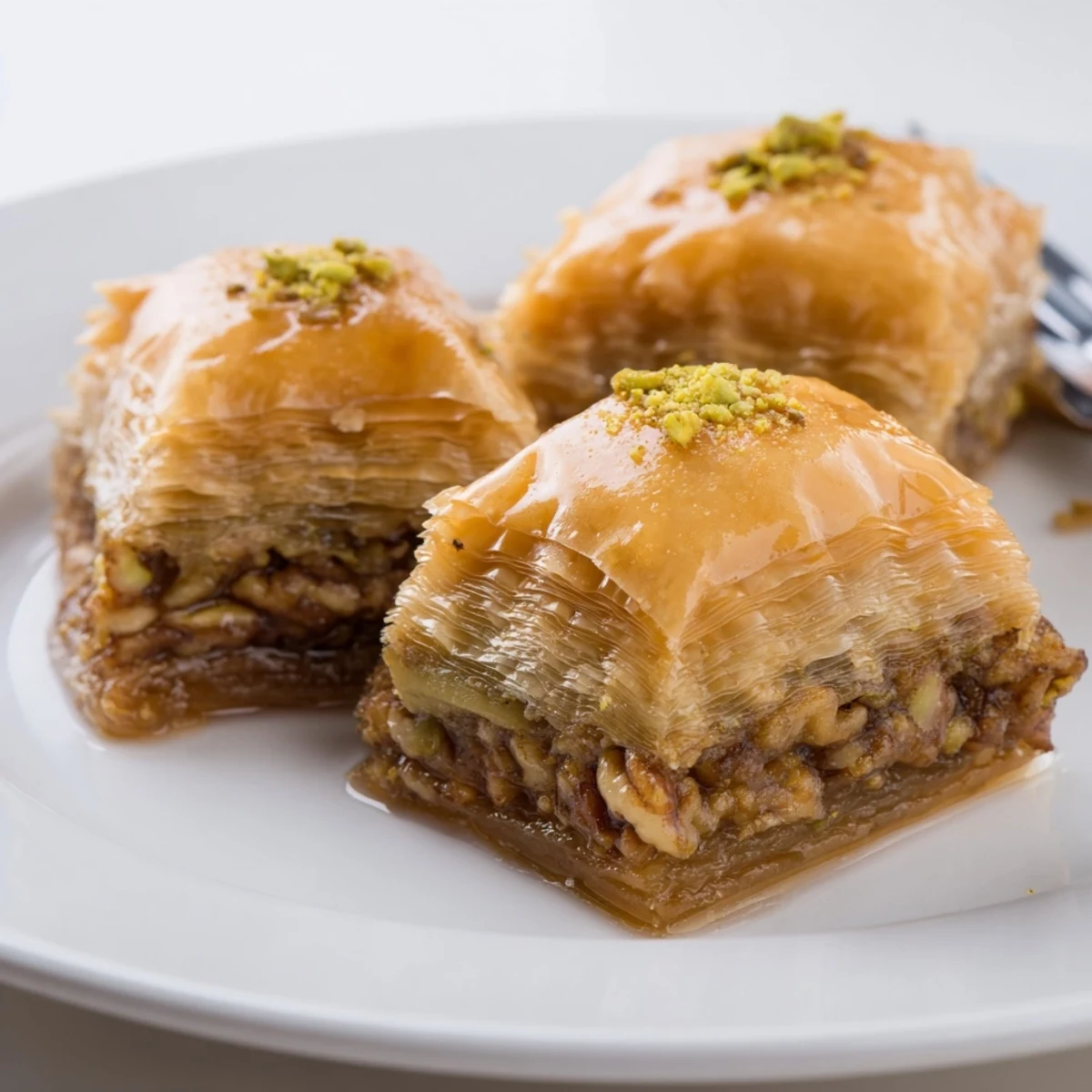
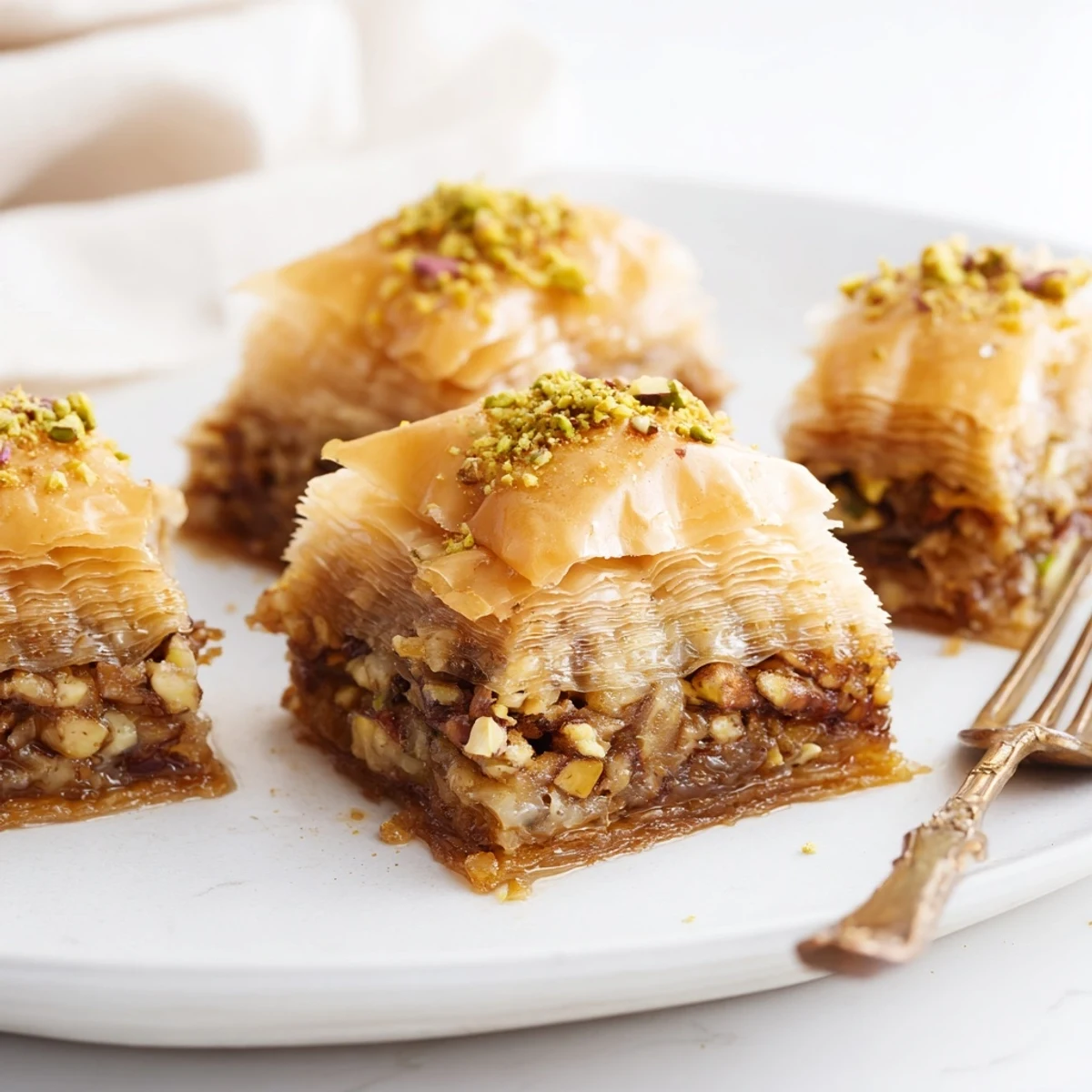
Save This traditional Greek dessert features twenty sheets of delicate phyllo dough brushed with melted butter and layered with a fragrant mixture of finely chopped walnuts, pistachios, almonds, cinnamon, cloves, and sugar. After baking until golden brown, the pastry is drenched in a warm syrup made from honey, sugar, water, cinnamon stick, and lemon peel. The syrup absorbs into the layers as it cools, creating that signature sticky-sweet texture. Best served the next day after flavors have melded, alongside Greek coffee or mint tea.
My yiayia's kitchen always smelled like butter and honey, especially on Sunday mornings when she'd pull that golden tray from the oven. I learned watching her quick, confident hands that baklava isn't about perfection - it's about rhythm and patience. She'd hum while layering those paper-thin sheets, telling me stories about her own mother in Thessaloniki. Now whenever I brush butter onto phyllo, I'm transported back to her tiny kitchen, the radio playing soft Greek music in the background.
Last Christmas, I made three trays for our neighborhood gathering. My neighbor Maria, whose own baklava is legendary, took one bite and got quiet. Then she grabbed my hand and said, 'Child, this is the real deal.' That moment meant more than any compliment because Maria doesn't give praise lightly. Now every holiday, someone texts asking if 'the baklava' is making an appearance.
Ingredients
- Walnuts, pistachios, and almonds: This triple nut combination creates the most complex flavor profile - walnuts for earthiness, pistachios for that slight floral sweetness, and almonds for subtle crunch
- Ground cinnamon and cloves: Warm spices that perfectly bridge the gap between savory nuts and sweet honey syrup
- Phyllo dough: Keep it covered with a damp towel while working - dried out sheets will tear and make you want to cry
- Unsalted butter, melted: Don't be shy with it - every single layer needs brushing or you'll miss that signature shatter
- Granulated sugar, water, and honey: The honey syrup needs to be warm, not hot, when you pour it over hot baklava - that temperature difference creates the perfect texture
- Cinnamon stick and lemon peel: These aromatics infuse the syrup while it simmers, adding subtle depth you can't quite put your finger on
Instructions
- Get your station ready:
- Preheat that oven to 170°C and butter your baking dish like your life depends on it - every corner matters
- Mix the magic filling:
- Combine those three nuts with cinnamon, cloves, and sugar until everything's evenly distributed - give it a taste and adjust if you want more spice
- Protect your phyllo:
- Unroll the sheets and immediately cover them with a lightly damp cloth - dried phyllo is the enemy here
- Build the foundation:
- Lay down eight sheets, brushing each one with melted butter - work quickly but deliberately, no need to rush
- First nut layer:
- Sprinkle exactly one third of your nut mixture evenly across those buttered sheets - think of it as creating a perfect blanket
- Layer and repeat:
- Add four more buttered sheets, another third of nuts, four sheets, the remaining nuts, then finish with four final sheets on top
- Score before baking:
- Use your sharpest knife to cut diamonds or squares - go all the way through but be gentle so you don't squish those layers
- Bake until golden:
- Let it go for 45 to 50 minutes until everything's deeply golden and smelling like heaven - don't underbake or you'll miss that crucial crisp
- Make the syrup while it bakes:
- Simmer sugar, water, honey, cinnamon stick, and lemon peel for 10 minutes then cool slightly - timing is everything here
- The grand finale:
- Pour that warm syrup slowly over the hot baklava the moment it comes out - listen to that satisfying sizzle as it absorbs
- Patience pays off:
- Let it cool completely before serving - the texture transformation that happens during cooling is absolutely worth the wait
 Save
Save What started as a way to feel connected to my heritage has become my most requested recipe. There's something profoundly satisfying about taking those paper-thin sheets and transforming them into something so impossibly indulgent. Every time I serve it, someone asks for the recipe - and I always tell them the secret isn't in the ingredients, it's in the love you layer between them.
Making Ahead
Baklava is actually better the next day, maybe even the day after that. The syrup needs time to really work its way through every single layer, softening just enough while maintaining that signature crunch. I've made it up to three days ahead, covered tightly at room temperature, and it only gets better with time. Just don't refrigerate it unless absolutely necessary - cold kills that perfect texture.
Serving Suggestions
A tiny square goes incredibly far because it's so rich and sweet. I love serving it alongside strong Greek coffee or mint tea to cut through all that honey. Sometimes I'll add a tiny dollop of unsweetened whipped cream or a scoop of vanilla ice cream for those who want to temper the sweetness. A pinch of flaky sea salt on top? Absolute game changer that makes all those flavors pop.
Storage and Troubleshooting
Keep it at room temperature, covered tightly with plastic wrap or in an airtight container, for up to five days. If your baklava ends up soggy, it probably needed more baking time or the syrup was too hot when poured. If it's too dry to cut through cleanly, you probably didn't use enough butter between layers or the syrup cooled too much before pouring.
- If sheets tear while layering, just patch them together - nobody will notice once it's baked and soaked
- Butter needs to be completely melted and slightly cooled - too hot and it'll tear the phyllo, too cool and it won't spread evenly
- Work with one phyllo sheet at a time and keep the rest covered - exposure to air is what makes them brittle and uncooperative
 Save
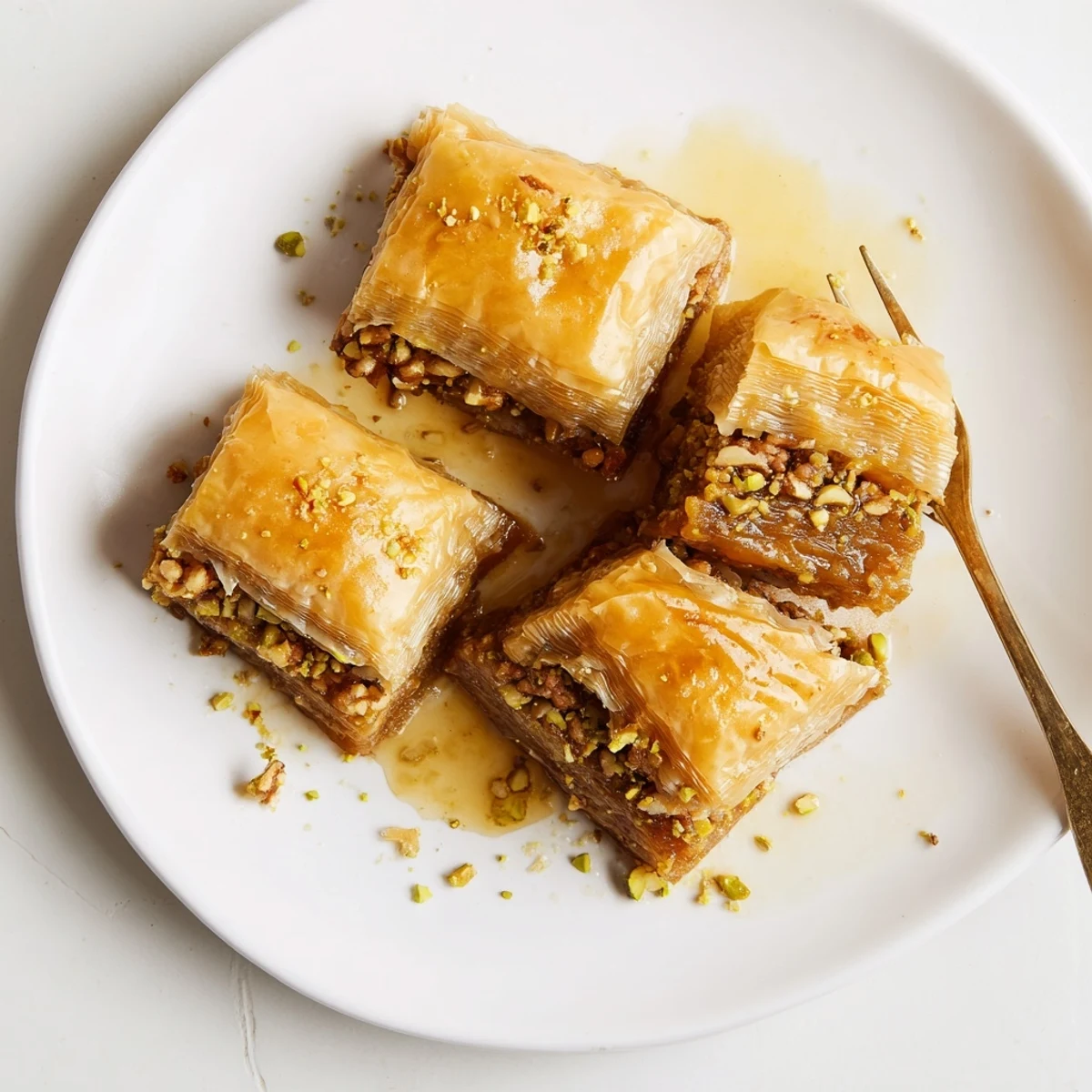
Save There's something almost meditative about the rhythm of layering, brushing, sprinkling. Maybe that's why it's been passed down through generations - it's not just a dessert, it's a moment of quiet creation in a chaotic world.
Recipe FAQs
- → What nuts work best in baklava?
-
Walnuts and pistachios create the most authentic Greek flavor profile. Almonds can be added for texture. The nuts should be finely chopped but not ground into a paste to maintain crunch throughout the layers.
- → Why is baklava cut before baking?
-
Scoring the baklava before baking ensures clean cuts through the crisp layers. Cutting through raw phyllo prevents shattering and helps the honey syrup penetrate evenly into all sections once poured over the hot pastry.
- → Should syrup be hot or cold when pouring?
-
Pour warm syrup over hot baklava immediately after removing from the oven. This temperature difference allows the syrup to absorb fully into the layers without making the pastry soggy. Cold syrup on hot pastry creates steam that forces absorption.
- → How long should baklava cool before serving?
-
Allow baklava to cool completely at room temperature for 3-4 hours. The flavors actually improve overnight as the syrup fully saturates the phyllo layers. Store at room temperature covered for up to five days.
- → Can I freeze baklava?
-
Freeze baklava before adding the syrup. Wrap the baked, cooled pastry tightly in plastic and freeze for up to 3 months. Thaw completely, then pour warm syrup over before serving. Freezing after syrup addition makes the texture soggy.
- → What makes baklava authentic Greek style?
-
Greek baklava typically uses honey-based syrup rather than sugar-only syrup, plus walnuts as the primary nut. The addition of lemon peel and cinnamon stick to the syrup creates that distinctive Mediterranean aroma.